
What is a Pow-Wow?
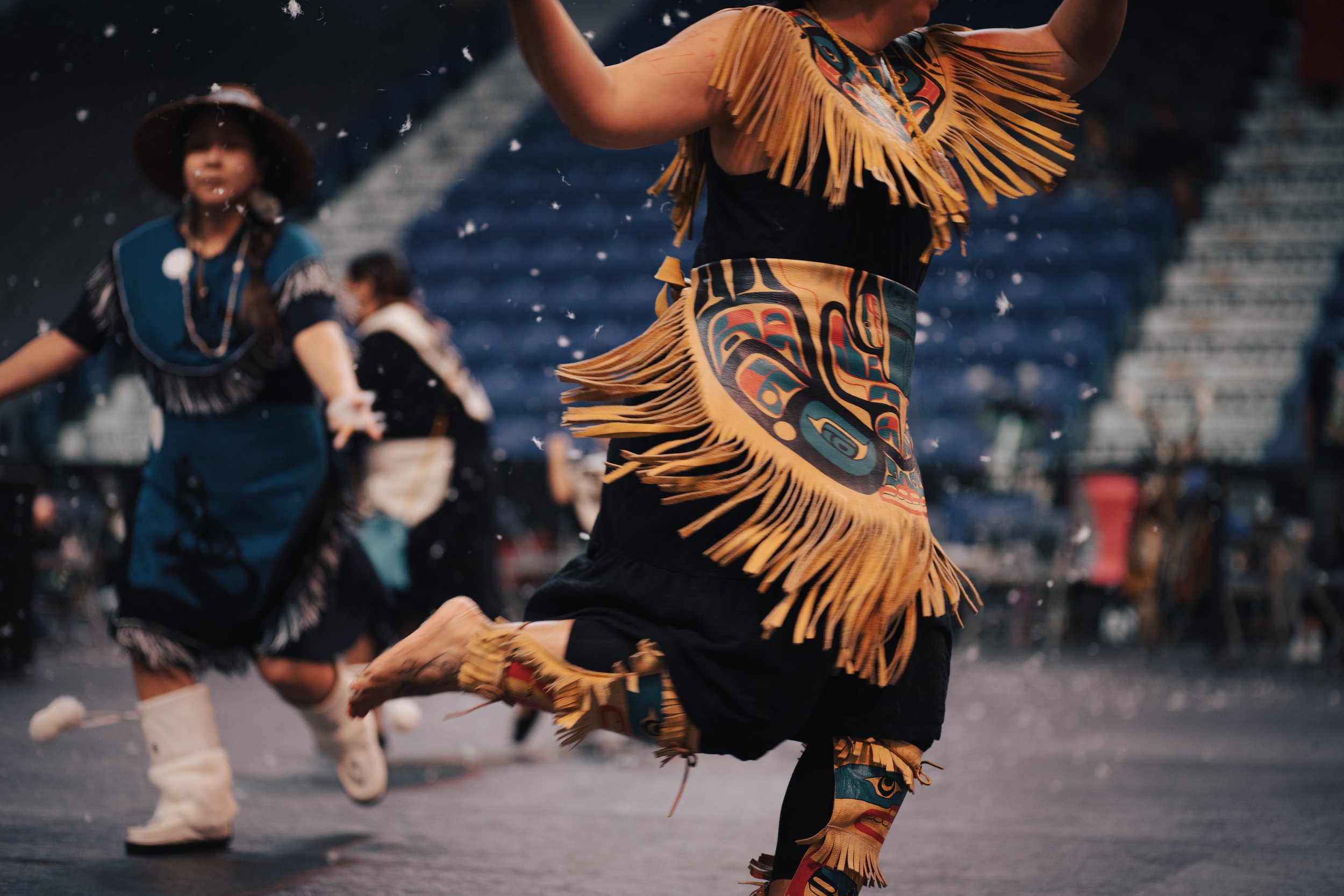
A pow-wow is an Indigenous gathering that brings together dance, song, and community. Traditionally hosted by one Nation to welcome and honour others, these gatherings are often held over a three-day weekend, with people travelling from great distances to attend. While most take place during the summer months, they now occur year-round across North America. All people are welcome, and attending can be a meaningful cultural experience for those new to Indigenous traditions.
There are two common formats: traditional and competition. Traditional gatherings emphasize ceremony and community, with dancers and singers receiving day money and participating in honourings, giveaways, and special dances. Competition gatherings offer prize money for top dancers and drum groups, depending on available resources. Both formats celebrate culture, connection, and shared experience.
Dance Styles
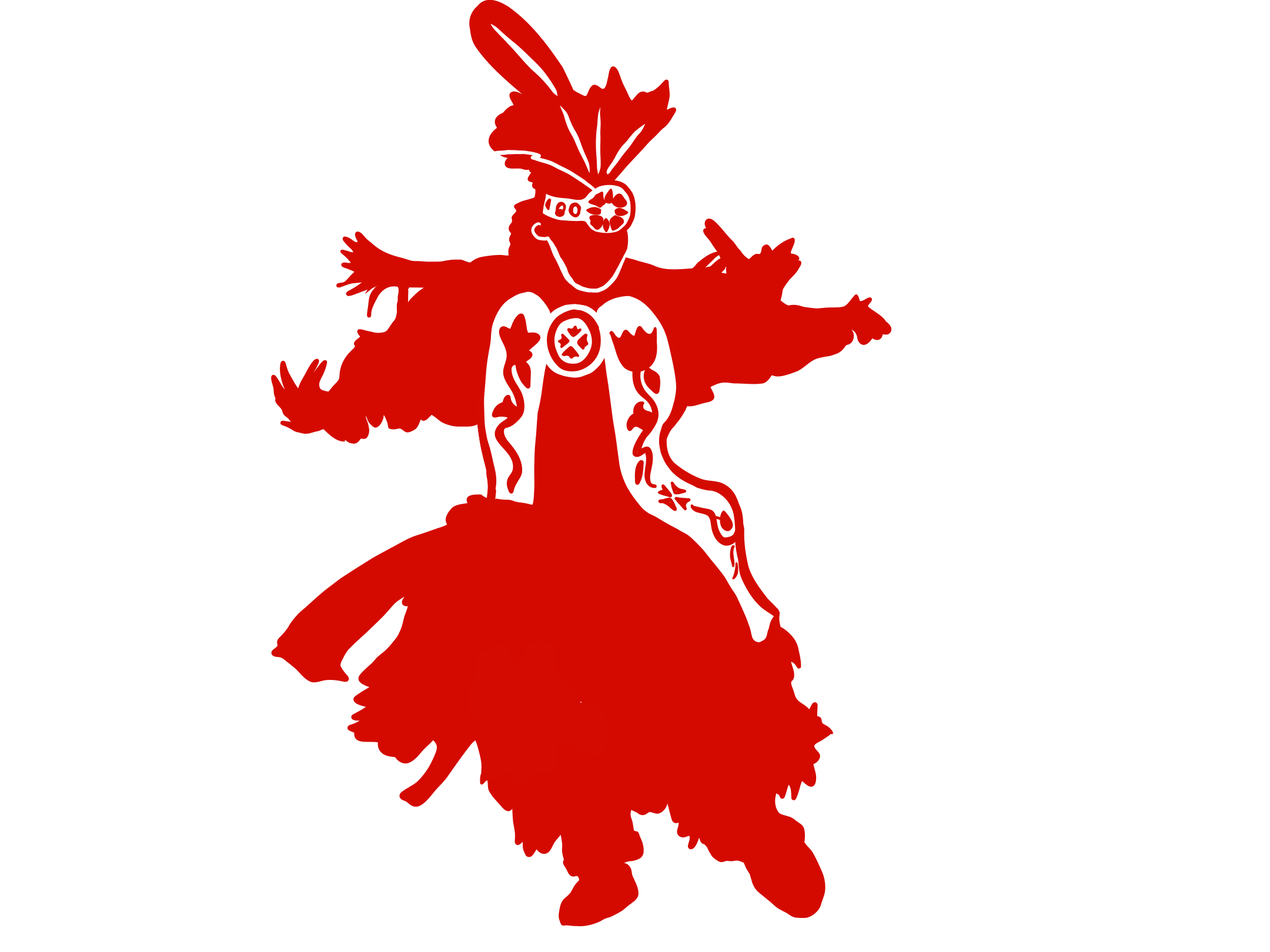
Men’s Traditional
The dancer wears a bustle, often of eagle feathers, a bone bead breastplate, leggings, beaded moccasins, a beaded belt, ankle bells, a porcupine roach headdress, breechcloth, various beaded accessories, and carries an eagle feather fan.
These dancers often paint their faces in different styles, sometimes derived from their family or nation’s designs. Out of respect for this dance, spectators may be asked to stand.
Men’s Grass
This is the oldest style of pow-wow dances. Originating in the plains, there are several stories as to how it started. One version (Ponca) tells of when, long ago, the people went to an isolated spot on the prairie to give thanks. Some of the men stomped down the grasses to make way for dancing.
The regalia consists of yokes and breechcloths fringed with rows of brightly coloured yarn (grass), usually a roach headdress, fringed anklets, and sheep bells worn around the lower legs. Grass dancers use many sways, dips and sliding steps.
Men’s Fancy
This dance originated in Oklahoma and is one that lets each dancer demonstrate his athletic ability and originality. Acrobatics are not uncommon, and this dance requires a lot of endurance.
The men wear double bustles, usually trimmed with brightly dyed hackle feathers, decorated yokes and breechcloths, angora anklets with sheep bells, beaded moccasins, arm bands and a porcupine roach.
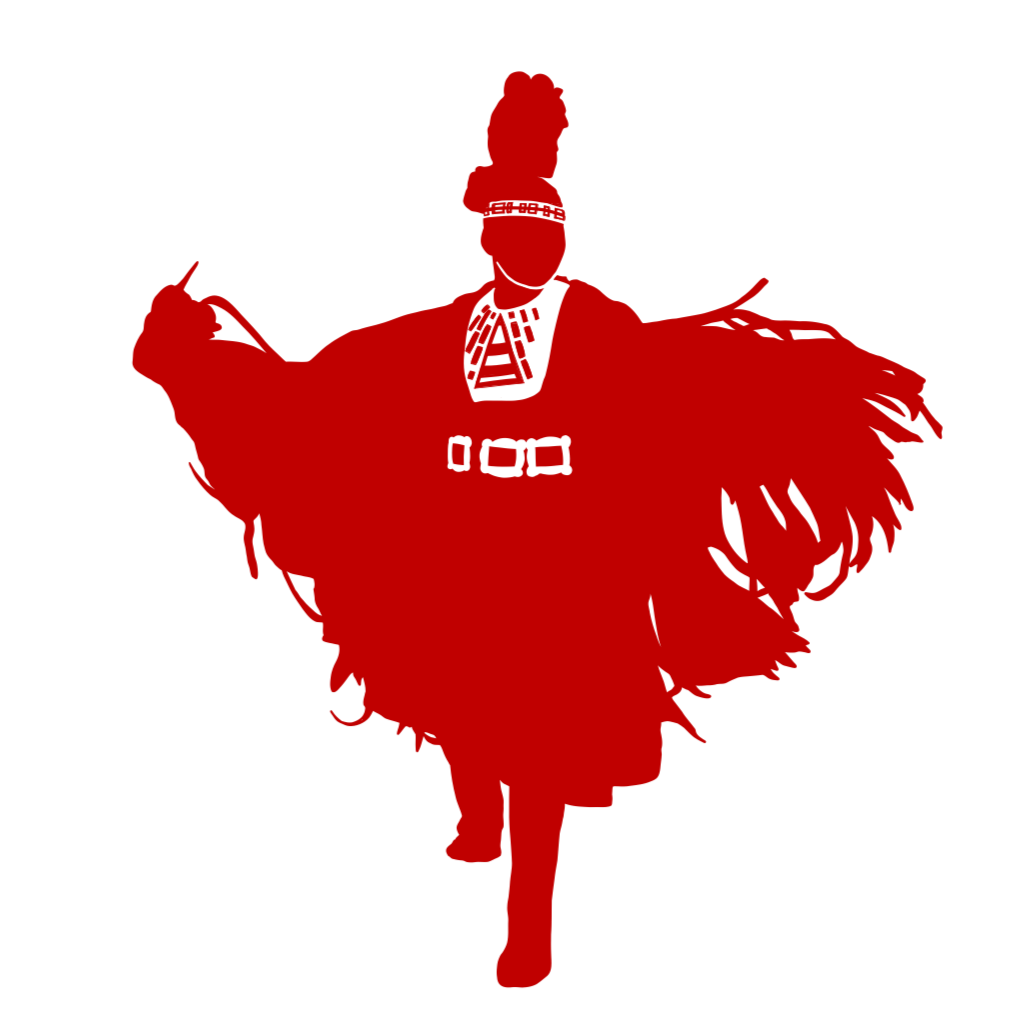
Women’s Traditional
In this dance, women wear either buckskin or cloth regalia. Buckskin dresses often have fully beaded yokes, long fringe, and the dancers wear long breasted plates, and beaded moccasins and leggings. Cloth dresses are commonly decorated with elk teeth or dentalium shells and breastplates. Both style of dancers carries a shawl folded over an arm and carry an eagle feather fan.
This dance is one that requires much skill to stay perfect rhythm, stepping lightly, slightly bobbing up and down, and allowing the fringe on their dresses and shawls to sway so gracefully.
Women’s Jingle
This dance comes from the Ojibway Nation and started in about the 1920’s. The dresses are decorated with rolled snuff can lids (other types of metal lids may be used), which hit each other when the dancer moves, creating a pleasing “jingle” sound. She carries a feather fan, and sometimes a scarf or beaded purse.
Beaded leggings, moccasins, and a beaded or concho belt complete the outfit. Besides the traditional jingle step, they also use a sidestep, in which the dancer moves both feet along in a slide-type motion, or steps sideways to the beat.
Women’s Fancy
This dance is said to represent the transition of a cocoon to a butterfly. Women wear calf length skirts, a beaded or sequined cape/vest, and matching leggings and moccasins. The shawl is worn across the shoulders and held slightly out at the elbows.
The dancer uses spins and freestyle footwork to demonstrate her originality.

About stalew Arts & Cultural Society
stɑl̓əw̓ Arts and Cultural Society is a not-for-profit organization dedicated to empowering Indigenous artists to share their gifts. The society's focus is to foster nationhood and to support the rebuilding of Indigenous communities, particularly through the development of opportunities in the arts, culture and language.
This is achieved through training, mentorships and apprenticeships, workshops, culture and heritage projects, gatherings, traditional ceremonial offerings, sharing Elder’s knowledge, access to equipment and venues, and language teaching/use. We support local artists to help revitalize Indigenous culture in our communities and beyond.
Our ultimate goals are to improve the social, cultural and economic wellbeing and prosperity of local Indigenous people and to develop healthier, more sustainable Indigenous communities.